At least my original home… I’ve lived almost as long in Aotearoa NZ as I did back home in the USA… This has me thinking about place and presence. And this, in turn, has me building a mental taxonomy of the different kinds of absence.
The choice between absence and presence becomes manifest at Christmas.
I Can’t Be There
One type of absence is simply about physics. As much as I might like to, science won’t let me be in Birkenhead, Auckland, New Zealand and Bolivar, Missouri, United States – at the same time – for Christmas.
This kind of absence is kind and regretful. I give my apologies and excuse myself. It’s also very practical, as in, “Don’t include me in table-setting numbers.”
I Won’t Be There
There’s another type of absence that is not about physical possibility but perceived propriety. It’s about judgment. I am constrained not by physics, but by ethics.
After the 2024 re-election of Donald Trump, a phenomenon called “Boycotting Thanksgiving” happened, where people would protest both his re-election and family members who voted for him by absenting themselves from family Thanksgiving gatherings. Trump support trumps family relationships..
Ironically, boycotting your family at Thanksgiving for doing politics wrong reminds me of the Exclusive Brethren (Plymouth Brethren Christian Church) practice of ‘shunning’ your family for doing religion wrong.
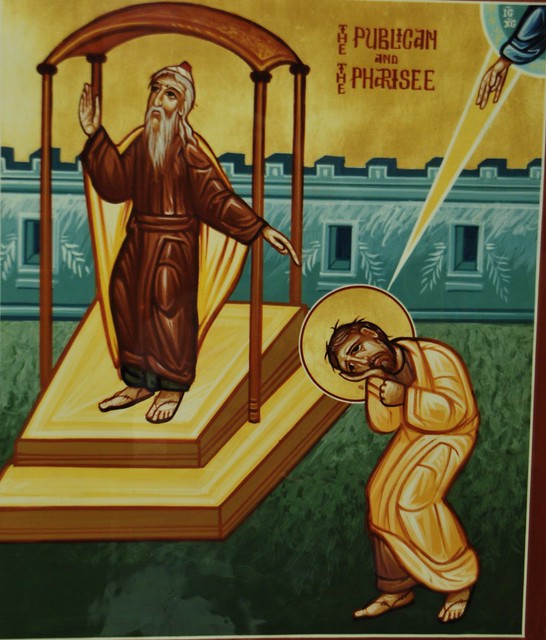
This kind of in-your-face face-turning has many forms. ‘Snubbing’ or ‘blanking’ is famously pictured in The Sneetches by Dr. Seuss. The Star-belly sneetches, knowing themselves to be superior to the Plain-belly sneetches, “saunter straight past them without even talking.” It’s the same posture as the hilariously exaggerated arrogance of the Pharisee in Jesus’ parable where he thanks God he is not like the tax-collector (Luke 18:9-14).
This kind of absence is passive-aggressive and judgmental. I toss the hand-grenade over the wall and it explodes with the message that reads, “I won’t be around that person.” I protest the presence of ‘that person’ by excluding myself from the gathering or denying them the dignity of eye-contact.
You Can’t Be There
The third kind of absence is about safety. And that makes it really tricky…
Safety is really important – obviously. For example, on the one hand, we need to reform our approaches to crime and incarceration, but on the other hand, the fact still remains that at least in specific situations some humans need to be kept away from other humans. But safety is different from what is sometimes called safety-ism…
What concerns me is when this kind of extreme language is used of much more ordinary situations. When ‘safety’ language is used to describe situations that are not truly dangerous, but about difference of opinion and clashes of personalities. Even more concerning is when such ‘safety’ language is used to justify excluding people from spaces.
Human spaces like churches, volunteer organisations, workplaces and sports teams will always have challenges, because of the humans that comprise them. But being ‘difficult’ is not the same thing as being ‘toxic’ or ‘unsafe’. It’s one thing to need some time-out in a situation, or put a time-limit on a conversation. There are a thousand ways to stay present with ordinary difficult people rather than excluding or rejecting them.
This kind of enforced absence can feel authoritarian. In the name of virtuous protection, it points the finger and says “Yep exclusion may sound rough, but that’s exactly what you deserve.” It imagines itself as rescuing victims from persecutors.
I’ll See You There
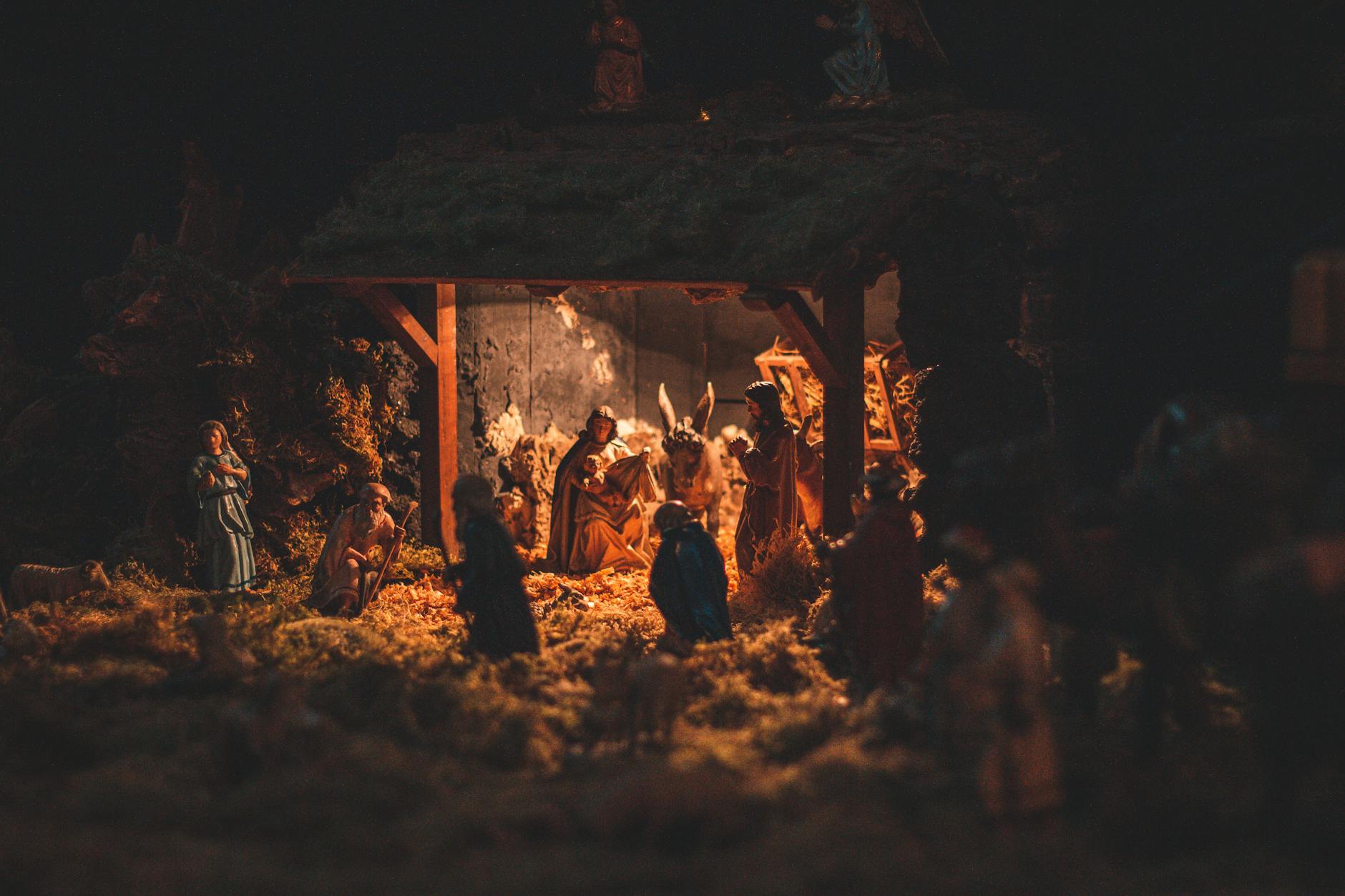
By contrast, Advent and Christmas is about the God who is omni-present (present everywhere) becoming uniquely and locally present in the person of Jesus Christ. The Creator whose presence surges through the cosmos in a way that electricity can only dream of, who never ‘left’ the creation, majestically ‘arrives’ within and connects to the the creation, to the earth, to humanity, to the nation of Israel, to Mary the Theotokos (the God-bearer).
This is the God of Scripture who promises his unique presence (described by rabbinic tradition as Shekinah) in various ways, times and yes places. It’s the God who walks in the Garden, meets on Mountains like Sinai, dwells between the cherubim above the ark, and mysteriously descends to feed his people through Bread and Wine.
This is a vision of God whose cosmic presence is always a reality, but who will never coerce us to seek out, align with, and thus encounter and experience his local Presence. Christ is the Incarnation of a God who loves to welcome all who seek Him (including the ones we least likely expect to be looking for God). This is a Saviour who dines with the one who betrayed him to death. And who doesn’t flinch when religious leaders like priests, Pharisees and pastors exclude themselves from his presence.
It’s a God who is never ‘not there’. It’s a God who says ‘I’ll see you there.’
What does this vision of God mean for us this Christmas? It can mean as much as you dare to let it mean.
May it mean looking for the presence of God in those you are least likely to see it in. May it mean going to that dinner, that function, that space where ‘they’ will be. May it mean courageously seeking out that person you have cut off and extending an olive branch. May it mean eye-contact or even a hand-shake with someone you don’t really like.
May it mean forgoing the judgment of absence… And instead practicing the grace of presence.
[I originally shared this as part of a City Collectives Retreat with leaders from Wellington, Tauranga, Invercargill and Auckland. It is a letter that draws from snippets of 1st century church history, and seeks to imagine what the Apostle Paul might say to modern Christian leaders seeking to pursue unified mission at a city level.]
Letter from the ‘Corinth Church Network’
Paul, a fellow slave in the Gospel, by the hand of Tertius my faithful collaborator and scribe, To those called to serve church networks in the cities of Aotearoa New Zealand.
I pray, as you partner together for the Father’s purpose, that the Gospel may continue to bear fruit in Invercargill & Tauranga, Wellington & Auckland; just as it has in our City Gospel Networks in Jerusalem & Antioch, Thessalonica & Rome, Ephesus & Phillipi, and Corinth where I am currently writing from.
Our labour here as the ‘Corinth Church Network’ has not been without diƯiculty. You’ll find this anywhere you have many gatherings of believers in a single city. I do not want you to be unaware of both the blessings and the challenges you are likely to face as you collaborate for His glory in your cities. So yes, I will dare to boast to you of our experiences of God’s power, which are always found in the midst of weakness, not strength.
I am not ashamed of the Gospel. Deeper than the gospel of Caesar in my time, or the gospel of consumption or the myth of progress in your time. The gospel is the gospel of Jesus. The good news that Jesus is Lord. This news has profound implications both for humanity and the whole creation. Yes, the whole gospel has holistic implications. Not simply for the afterlife, as even Greeks believe, but for a New Life that transforms minds, hearts, spirits, souls… and raises bodies, marriages, families, communities, cities and ultimately heaven and earth.
You have a few really useful creeds that express the dramatic, transcultural, trans-historic scope of this gospel – from the Apostles, Nicea, Athanasius and more. I myself tucked a very short, very early, and very resurrection-focused creed in the fifteenth chapter of my letter to the Corinth Church Network. Resurrection is everything – without it we should all go do something else. The whole gospel hinges on resurrection. But as I said in the ending of that chapter, the truth of resurrection must lead to the ‘therefore’ of abounding in the work of the Lord.
There are so many ways to abound in Resurrection work in a city. Collaborative evangelism campaigns. Local food drives. Christmas floats. Partnership with social service orgs specialising in wrap around care. The whole spectrum. Timeless hope for eternity… and timely help for the poor.
This is the whole gospel. Sure, the Lord can use dreams and visions to directly implant this gospel in people’s imaginations. But his usual way of propagating it is through ordinary human messengers – the Church. The whole Church, in united and reconciled diversity is God’s ongoing evidence of resurrection. A beaming miracle of grace. The whole Gospel, displayed in the whole Church.
This gorgeous full display of the whole Gospel is wrecked by all forms of disunity – competition, comparison and division. Think of Peter’s mealtime hypocrisy at Antioch, or Euodia and Syntyche’s incessant bickering at Phillipi. These all had to be dealt with – directly and even publicly – no matter how awkward. Unity is that precious.
I’m not saying you can’t disagree or debate. Actually, that can be healthy. Don’t imagine, as so many do, that unity is some kind of effortless ‘good vibes only’ zone where there is no disagreement. Welcome – even invite disagreement within your teams and networks – that’s how you build trust, make people feel that they are not just serving your thing, and that’s how you begin to build unity that is truly collaborative and missional. Don’t assume you know what needs to be done all the time.
That sounds counter-intuitive to your ears, doesn’t it? It’s because your culture has a particular aversion to anything that stands in the way your own personal sovereign will and imagination. But proper debate and dialogue must be normal in the kingdom. Great things are on the other side of patient listening. One of our famous early disagreements about Gentiles, circumcision and law observance was worth having slowly. At this assembly in Jerusalem, Barnabas and I patiently worked through “much discussion” with the church, the apostles, and elders. We came out with an outstanding letter because we had the courage and patience for a full conversation. So then, as you plan, build, strategize, form, storm and norm, don’t rush. Hear people out. Move at Godspeed.
Not everyone that disagrees with you is being divisive or argumentative. Know the difference. Sure, sometimes we choose to work separately, like me and Barnabas or John Mark. But don’t permanently write one another off. Make every effort to unify.
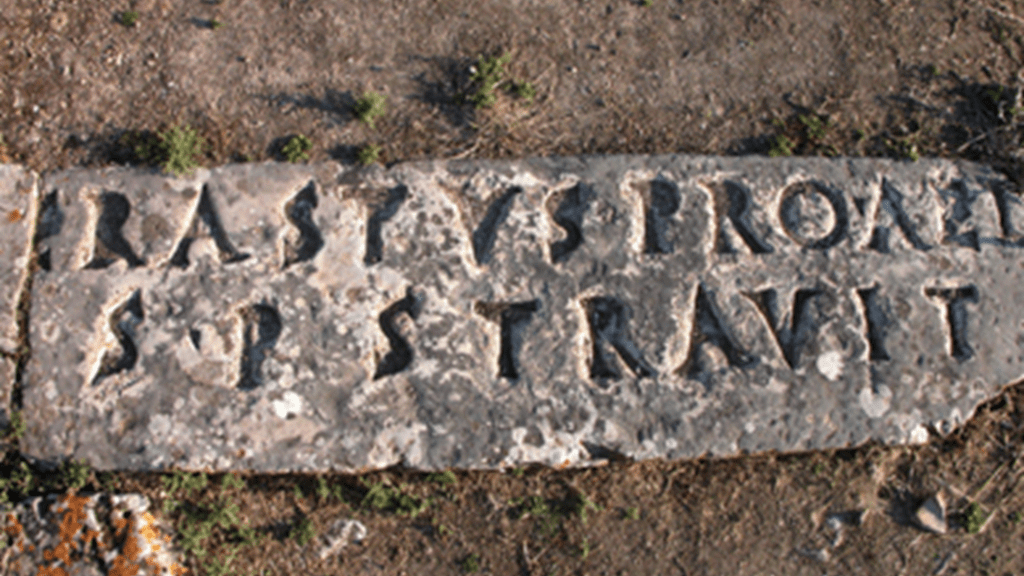
There’s another huge mistake to stay aware of, made famous by some here at Corinth. They obsessed over Apollos, Peter, super apostles, and anyone with the prized abilities of knowledge and speaking. Their choices of who got to speak, and who was important sent a clear message of “I don’t need you” which – surprise, surprise, always leaves many feeling “I am not a part of the body.” This is travesty. I love to praise people, but I cannot praise this. In my letters to the Corinth and Rome Church Network, I went out of my way to name many members of the body. High and low. Male and female. Jew and Gentile. Servants and free-persons. Low-sounding names like Fortunatus (‘Lucky’), or simple servant names like Tertius and Quartus (‘third’ and ‘fourth’), deserve to be named alongside Erastus, the city’s director of public works. Name orators next to slaves. Speakers next to scribes. Hosts with guests. That’s the whole church.
Your city gospel movements must stretch and reach to the whole church in each city. Strive to acknowledge and associate with the names of churches and leaders that are less acknowledged. Don’t only associate with people from ‘thriving’ churches. Build teams where ‘average’ lead alongside ‘inspiring’ people. Don’t just tell success stories. City Church Networks, like individual Christians and Churches, rarely grow from strength to strength, but frequently through the usual mix of good bursts, small fizzles, pivots and improvements. It’s not about being amazing all the time.
Host prayer gatherings with all kinds of prayer styles, not just the ones that look great on Instagram. Take, for example, one of your recent moments of revival at Asbury. The gathering it started with was not glitzy. Jon Tyson called it a “badly run prayer meeting”; but… it had humility… sincerity… confession. Utter disregard for brand, logos, or celebrity. More of that please. I’m not saying we should worship with half-hearted complacency. Go hard. Spend money. Practice. Break your jars of precious ointment. But just beware the obsession with awesome people doing awesome things. It’s more Corinthian than Christian.
Most of your cities will have many kinds of believers. The things churches pride themselves on are often the very things that separate. Expertise in end time predictive prophecy. Obsession with spirit gifts and miracles. Exacting explanations of precisely how the Spirit is – or isn’t – present in bread and wine. Making a competition out of worship, preaching or social justice…
Why does all this matter? Because the how and who of our city church networking says something about the God we believe in. God is not only the God of Big bible names like Moses, Isaiah and David, but also Miriam, Amos and Nathan. Not only prophets, priests and kings, but also slaves, widows, orphans, strangers, farmers, rubbish collectors, waitresses, Uber drivers, tradies and truck drivers.
I’m not saying anyone can do anything. I’m just saying work hard at unity that is shocking, surprising and unexpected. That Aussie bloke Stuart Piggin is onto something. It’s never been about platforms, personalities or performers. Find ways to weave the tribes, the worship styles, and levels of cool. Catholics and charismatics. Robes and jandals. Affluent and awkward. Perfect haircuts and bad teeth. Why? Because it takes the whole Church to display the whole Gospel.
And finally, the whole Gospel summons the whole Church to and through the whole City. Churches and church networks should match the demographics of the context God has placed them in. Christians are drawn from the whole city… and sent back into the whole city.
I’ve already mentioned how diƯicult this was in the Corinth Church Network. The elite leaders didn’t like this. They loved high lofty leaders and super apostles who postured themselves like Greek sophists. They were addicted to gathering around big names from overseas. They wanted their gatherings to flow with the finest wine, food and philosophy as if church was a Symposium. They were happy to get gorged and drunk while others starved – some literally to death. I think I said it best when I wrote to the Rome Church Network to “associate with people of low status.”
Don’t get me wrong. We need generous hosts like Gaius. And yes, the gospel is advanced through strategic connections with civic leaders like Erastus. Yes, we can and should network with people outside our immediate spheres. But bi-vocational tradies and tent-makers like Aquila and Priscilla, young people like Timothy, people with past mistakes like Peter, Onesimus and John Mark – they are crucial to God’s work. Don’t overlook quiet, local and un-amazing wisdom.
Your cities, especially you, Auckland, are dripping with diversity of culture, income levels, language, interests and lots of struggle, isolation, pain and privilege. Be people of the whole city. Work hard at it. Go past the performative levels of diversity and compassion. Oh yes, learn Te Reo Māori by all means. God is delighted that this language renewal movement has become popular in your time. But also make the effort to learn a few greetings in NZ Sign Language, Korean, Mandarin Chinese, Fijian, Samoan and all you can. Don’t just occasionally enjoy their foods but get to know their histories. All the people… in all of the City. That’s how we begin on the long journey of living out the meaning of Pentecost and the multi-cultural, multi-lingual reality of kingdom life the Spirit.
That, my dear friends, is my appeal to you. That is the pain, the challenge, the vision and the blessing of being City Gospel Movements. Witnessing to the Whole Gospel. Joining together with the Whole Church. Reaching in blessing to the Whole City.
The Grace and Shalom of God be ever with you. Amen.
The God we meet in the pages of the Old and New Testaments is revealed, I am convinced, as a God of love.
God is not – at heart – an angry violent God who occasionally needs to do the odd bit of loving and forgiving. God is love, and sometimes love has to act through violence.
C.S. Lewis is not the only one to describe God as a God of delegation. God delegates his creational order to Nature. God delegates his rule of creation to the image-bearing humans tasked with tending and keeping the garden. God speaks through Moses, the prophets, preachers, and donkeys.
I’d like to document here two observations about some of the divine violence in the Bible. And in no way is this to pretend to have simplistic solutions to such matters. There is something tragic and mysterious about divine violence that we are probably supposed to continually wrestle with. I just think these are helpful perspectives.
God uses imperfect and immoral human actors to bring his punishment. Israel understood their exile to Babylon as divine punishment for their evil and unfaithfulness. Babylon was not a picture of human flourishing. But Israel’s prophets understood the violent actions of Babylon as both allowed and used by God for their own punishment. Likewise, when Israel took the promised land, they were themselves not perfect. The point here is that God uses humans for this. God does not show up in person to do this violence. Direct supernatural intervention is rare. Usually in biblical conflicts there are natural events and elements involved, like water, wind, fire, storms, mud, thunder, frogs, etc.
God expels people from places meant to be beachheads of peace, flourishing and shalom. This pattern starts in the garden, where Adam and Eve are expelled. When Israel took the promised land, it was full of people (Canaanites) who were practicing child sacrifice and violence – and were being expelled from the land. When Israel were later exiled, it was for the same evils of child-sacrifice, violence, idolatry and unfaithfulness. God wanted Jeru-salem (shalom – peace) to be a beachhead for peace. He wanted his people to be a light to the nations.
Human police forces and genuine peace-keeping of armies, are a helpful picture of God working through people who show up and hold space for peace to increase. God, then, seems to have a quite consistent purpose in this. To allow violence to collapse in on itself, and to advance peace on earth.
Keen to hear others thoughts on these ways of thinking about violence in Scripture.
I’ve been preaching, thinking about preaching, helping with preaching and trying to improve my preaching for around 20 years. I was working on a sermon series a few months ago and formed a personal metaphor for preaching. I think a comment from Dr. John Tucker (Carey Baptist) may have been rattling around in my head. I’m finally getting around to blogging in here in case it’s useful to anyone.
A sermon is like a car.
the interior
The interior of a car may be luxury leather, have modern gadgets, or much more simple but tidy and clean. But regardless of the level of luxury, the interior of a car is about hospitality to those we might be lending a ride to. We know, as a passenger, when “this car is nice to be in'”
Good preaching should – at this level – be “nice to listen to”. Here, we’re talking about tone, pace, pulpit manner, smoothness, passion, natural story-telling, energy, unction, urgency.
I personally think that my own preaching has always been most challenged at this level. And I’m not talking about me trying to sound like any famous speaker or preacher; etc. Marin Luther King Jr.. I just think I could tidy up my interior to make my sermons nicer to listen to. Tim Keller was an absolutely amazing preacher, but he wasn’t flashy, pacing around stages with lots of hand gestures. He had impeccable clarity, sincerity, humility, humour, and gentle urgency. It was magic. Calm and measured, but magic.
the exterior
The exterior of a car is also important. It could have an impressive modern shape, or a classic form, or perhaps it’s an ordinary mass-produced Toyota, but it’s clean and rust free and in good order. Regardless of how fancy the car looks, we notice the exterior. Particularly when we are selling or renting a car, we think, “Yeah, I’d be happy to be seen in this car’
A sermon should also ‘look’ presentable. It’s structure, language, illustrations, stories, visual aids, and use of acronyms and alliteration (or avoidance of them!) should help clarify the message, rather than obscure it.
My own practice here is, I think, a mix – good but room to work on. I work hard to craft sermons so that what I’m trying to communicate is obvious and clear. I get lazy with illustrations, sometimes using the first one that comes to mind, rather than searching and waiting (and praying) for one that captures the imagination – as good preaching should. Good preaching doesn’t need to draw attention to how good it looks. The point should be the truth communicated, not the amazing illustration used
the unseen
A good car, ultimately, is a car that will pass inspection; it must have a strong chassis, fit and fully-treaded tyres (yes my USA friends, that’s how we spell it down under!), the engine must be in good order, the brakes should work. You get the idea. A good car is one where you can be assured, “This is a safe car to travel in’
So with preaching. A good sermon is biblically based, the text is not conveniently ‘used’ to make whatever point I was determined to make, but is faithfully unpacked in a way that respects the context and makes appropriate connections, through the lens of Christ, to contemporary life. A good sermon is theologically sound. A good sermon is prophetic in that it brings a word that ‘comforts the disturbed, and disturbs the comfortable.’
I claim no perfection here in my own preaching, but it’s something I take very seriously. I care far less about having no stutters or having one alliteration too many, than I do about saying something that is not true to the Gospel of Jesus. That means that while I try to keep it simple, I avoid being simplistic. Equally I avoid unnecessary complexity. I try to ensure that the message is practically and politically relevant, without reducing it too legalistic to-do lists or scoring points for an issue currently in the news. The Gospel is big enough to almost always contain some blessing and challenge for everyone. But the filter is always the Gospel.
That’s the metaphor. Now there are a couple other thoughts… One for preachers, and one for those who plan who preaches (or doesn’t).
Preachers, let’s keep growing. Odd’s are, if you preach with any kind of regularity, you have some competency at 1 or 2 of these levels. But never stop growing and checking yourself. If you are a natural speaker and story teller, with captivating delivery, make sure what you’re saying actually respects the original context and meaning of the passage. If your sermons are impeccably biblical and sound, maybe you could work on doing the loving labour of looking a bit harder for illustrations that make your sermons have encounter moments not just sound truths. We don’t get better from compliments. Get a group of other preachers who want to grow, and take turns giving and receiving feedback on your sermons. It’s one of the best things I’ve ever participated in.
Churches, don’t fail to recognise the value of the unseen. Don’t fill your year with good looking, well-known people who are the ‘big names’ on the preaching circuit. Don’t overlook the less showy, less smooth-talking, less regarded preachers – either in your congregation or from other churches. The preaching style of the Apostle Paul did not impress some of his Corinthian critics. In 2 Corinthians 10:10 Paul lets them know that he’s heard that they are saying: “His letters are weighty and forceful, but in person he is unimpressive and his speaking amounts to nothing.” Don’t be the kind of church who wouldn’t invite Paul to come and take his turn teaching. Value the important less visible dimension.
Alcoholics Anonymous resulted from a combination of two historical trajectories.
One of these had to do with certain people at a certain time wrestling with the puzzle of a particular type of alcoholic. The best doctors, notably William Silkworth and Carl Jung had found their methods utterly ineffective for a certain type of drinker. Silkworth and Jung effectively said to Bill Wilson and Rowland Hazard – we’ve tried everything we know, and we can’t help you. Bill and Rowland were the type of alcoholic who drank even when they didn’t want to, even when they knew a great deal of accurate knowledge about their drinking experience.
To varying degrees, and with varying experiences, they would be overcome by what Silkworth called a physical ‘allergy’ to alcohol, which triggered a phenomenon of craving. One drink could usually trigger this. They also had a mental obsession, or a kind of blank spot, which meant all previous experience of suffering and humiliation and damage went out the window. The alcoholic ‘thinking’ that precedes, justifies, rationalizes or just throws in the towel just before the first drink.
Though such drinkers were often perfectly normal in other respects, being good men, successful businessmen, skilled physicians, etc., will power seemed to be non-operative with regard to alcohol. Their only hope, according to Silkworth and Jung, was what some called ‘vital spiritual experiences’, which had seen some of these types recover. But such miracles were rare and little understood. Alcoholics like Bill and Rowland were sent off looking for such a solution…
The second historical trajectory had to do with other people at another time seeking to get back to the basics of religion – in this case, Christianity. This trajectory in a sense goes all the way back to the dawn of humanity and all religious ideas, but in more practical terms it starts with the experience of Frank Buchman.
Buchman was a Lutheran minister who had started up a hospice for young men, and had grown so upset at the board over financial disagreements that he resigned. At the 1908 Keswick convention in England, a message preached by Jesse Penn-Lewis brought him face to face with his self-focused, self-justifying anger. He came to see that they had probably wronged him, but the main point for him was that he had gotten “so mixed in the wrong that I was the seventh wrong man.”
This foundational pivot, a perfect example of taking the log out of your own eye (Matthew 7:5), set Frank on a trajectory of founding the First Century Christian Fellowship, a movement seeing to embody a return to the original teachings of Christ, simple and practical. This fellowship, later known as the Oxford Group, had a particular affection for the Sermon on the Mount, the Lord’s Prayer, and the epistle of James. They were convinced that faith without works was useless, and that one must clear their blockages from God, be of service to others practically, and seek constant daily direction from God through prayer and meditation.
This movement, seeking to build Christianity down to it’s most vital elements, grew in effectiveness and size. Though they had no formal articulation of their process, through their four absolutes (Honesty, Unselfishness, Purity & Love), they saw the lives of many people with various struggles turned around, including many alcoholics. One in particular went by the name of Ebby Thatcher.
These two trajectories were made for one another, and would merge in the person of Bill Wilson.
Bill Wilson was one of those rare types of drinkers for whom there seemed no solution, save the rare spiritual kind. He was a friend of Ebby Thatcher, who had been dramatically sobered up through the Oxford Group. The story of Ebby sharing his experience with Bill is featured in chapter 1 of the Big Book of Alcoholics Anonymous, called ‘Bill’s Story’. At the time of the writing of the book, according to one of the foundational stories called ‘He Sold Himself Short’, the Oxford group had a sub-group of Alcoholics who seem to have tailored the Oxford process into a sequence of 6 steps, as used by Dr. Bob (the co-founder of A.A.):
1, Complete deflation. 2. Dependence and guidance from a Higher Power. 3. Moral inventory. 4. Confession. 5. Restitution. 6. Continued work with other alcoholics.
Bill and nearly a hundred other alcoholics adopted the Oxford process and formulated the 12 steps of AA as they are known now.
1. We admitted we were powerless over alcohol — that our lives had become unmanageable. 2. Came to believe that a Power greater than ourselves could restore us to sanity. 3. Made a decision to turn our will and our lives over to the care of God as we understood Him. 4. Made a searching and fearless moral inventory of ourselves. 5. Admitted to God, to ourselves, and to another human being the exact nature of our wrongs. 6. Were entirely ready to have God remove all these defects of character. 7. Humbly asked Him to remove our shortcomings. 8. Made a list of all persons we had harmed, and became willing to make amends to them all. 9. Made direct amends to such people wherever possible, except when to do so would injure them or others. 10. Continued to take personal inventory and when we were wrong promptly admitted it. 11. Sought through prayer and meditation to improve our conscious contact with God as we understood Him, praying only for knowledge of His will for us and the power to carry that out. 12. Having had a spiritual awakening as the result of these Steps, we tried to carry this message to alcoholics, and to practice these principles in all our affairs.
When you look at the steps, especially as they are explained in the AA Big Book, you can see that the first two steps encapsulate the wisdom of Dr Silkworth concerning the unique powerlessness and insanity of the alcoholic concerning alcohol. The rest of the programme seems clearly dependent on the process of the Oxford Group.
So there you have it.
Silkworth & Jung found that the alcoholic problem needed a spiritual solution Frank/OG spread a spiritual solution that relieved all kinds of problems. Bill and the early AA’s said yes – thank you.
At the summit of the sermon on the mount, Jesus teaches on the three central spiritual practices. Giving, Prayer and Fasting.
Prayer is the only one where he gives a practical example. The Lord’s Prayer. It stands out as something we should just do. Despite his focus in this section on being discreet, this prayer is given in a public, shared, communal form. ‘Our Father…’ It is the most – or one of the most – recited set of words on earth.
But for all three – giving, prayer and fasting – there is a focus throughout on doing it in secret or discreetly. It is secret practice where the reward is.
I wonder if the ‘reward’ is formation, transformation.
If this is the case, could the opposite also be true? Is it the case that if my praying, fasting and giving is mostly public, I will be transformed the least from those practices?
Could it be the case that only private practices truly transform us?
Christians believe God can be known. If we want to know what God is like, we aren’t left to seek mountain-top or chemically-induced experiences, wonderful as they may be. We don’t need to take a course in analytic philosophy, as intellectually satisfying as that could be.
We just behold Christ, and thus we know God.
Without this revelation, God will be misunderstood. Greatly.
Creation points us to a creator of some kind. But if all we use to know God is our experience, we’ll have a distorted, incomplete, and warped view of God.
What we experience as his sustaining of creation could be mistaken for Spinozan Pantheism What we experience as his patient non-interference could mistakenly be taken to buttress rationalist Deism What we experience as his dramatic occasional miracles could convince you that he is an Interventionist Butler. God On Demand.
Scripture weaves all these things together in a kind of theological God Temple. Omnipresence, Omniscience, Omnipotence (see Ps 139, the first 18 verses). And then it rips down that temple and re-builds it around the person of Crucified and risen Christ (see Colossians 1 or Hebrews 1).
Or as Luther said, Crux Sola Est Nostra Theologia The Cross is our only Theology.
After a full day of hard physical work – I feel tired. Appropriate physical feelings after building a deck, assembling a sleepout, what-have-you.
After a hard workout, one feels the satisfying exhaustion of caring for their physical health.
There are other forms of tired that I have absolutely no expertise to comment on. I don’t know a thing about chronic fatigue syndrome or other conditions where people experience physical, emotional or mental tiredness for specific reasons – or unknown ones. I’d be horrified if any of those people read what follows and felt that any of it was naively directed at them.
The type of tiredness I am about to write about, however, is understood to be a quite common thing among humans. The best way to describe it is to quote from the AA Big Book. The quote I will share (a bit later below) comes from the very end of the chapter called ‘Into Action’. The author (chiefly Bill Wilson) has just finished laying out the first 11 of the 12 steps, saving the following chapter entirely for step 12.
That context is important, so let me give just a tad more detail. The preceding material covering steps 1-11 has identified “selfishness – self-centeredness” as the fundamental element of the “spiritual malady” that underlies alcohol (and other forms) of addiction. The spiritual malady, importantly, is not unique to addicts or alcoholics. When, long before the quote I will share below, the Big Book illustrates the problem of trying to live, selfishly, by self-will, it uses the (now infamous) metaphor of the “actor trying to run the whole show”. And it is careful to point out that this self will does not only manifest in obviously selfish behaviour, but (perhaps most tragically of all) when the actor is trying to be helpful, make the world a better place, protect people from harm, encourage people to vote the right way, preach or teach good values to people, or to otherwise make the show better. We are most willful when we are convinced we are right.
Crucially, it doesn’t say that the alcoholic alone is like this kind of actor, but rather it says “Most people try to live by self-propulsion.” (emphasis added)
Not just addicts. “Most people”.
Most of us, therefore, can relate to the problem of self-will, selfishness, and the spiritual malady. Most of us can relate, therefore, to the programme and solution offered in the form of surrender (steps 1-3), discovery of personal defects of character and partnering with God to remove them (steps 4-7), becoming a person who can admit their wrongs and make amends (steps 8-9), and continued improvement at humility, spirituality and service (steps 10-12).
So then, the quote I’m just about to share comes after the great sweep of steps 1-11, which have emphasized again and again the need to deal to the underlying self-will behind their spiritual malady. It is about what I’m going to call spiritual tiredness. It describes the transformative effect of freedom that comes when one does the simple spiritual work of steps 1-11.
We become much more efficient. We do not tire so easily, for we are not burning up energy foolishly as we did when we were trying to arrange life to suit ourselves.
Under the lash of the spiritual malady, we ‘burn up’ all kinds of energy in the foolishness of trying to control the world, politics, social justice. It’s not that it’s inappropriate to be involved actively in the world and do our part. This kind of spiritual tiredness results from trying to control, to manage (or micro-manage) others, to ‘run the whole show’.
It’s too much. It’s exhausting. And was never our job.
To finish on a very simple Christian and biblical note, the essence here is I think quite aligned with what Jesus offers when he says (my paraphrase / misquotation) “Come to me all you who are weary and burdened. Take my yoke upon you, and you will find rest for your souls. for my yoke is easy and my burden is light.”
When I let God be God, and focus on just doing the part that he has for me, I do not tire so easily. I don’t suffer from spiritual exhaustion. I can calmly, sanely, soberly and efficiently just do my part.
The prayers, incantations, curses, blessings and healing practices found in the vast diversity of various indigenous spiritualities
Catholic spirituality which includes practices like adoration of the Host (flowing from a belief in Transubstantiation), praying to departed saints, etc.
The various occultic practices that are stereotypically ‘dark’ and engage in a multitude of ways with the unseen realm
Answer 1: They all believe that interaction with spiritual realities is a normal, every-day component of life in our time-space-matter world.
Answer 2: They tend to strictly separate spiritual from physical, except for rare interventions, which one of them denies entirely.
Short Reflection:
Contrasting these two lists is a bit of a cheeky attempt at framing things to make a point. Another way to frame them would be on a spectrum, from totally denying any/all spirit activity at one end, to some possibly harmful ways of being hyper-focused on spiritual activity at the other end. (For example, I would not want to naively accept every belief or practice reflected in the rather ad-hoc and vastly diverse collection of the first four.)
But it is worth noticing the binary. It’s a warning to people like me. The more I think and speak and act like naturalistic atheists or deists, the less vital my spiritual life will be.
Whatever negatives we may want to assert about any of the first four, the basic worldview at work is perfectly reasonable and resonant with vast human experience. A worldview that has at least these few points:
reality is not just physical but also spiritual
engagement with spiritual reality is not just for special rare occasions, but to be a regular part of life
Spiritual reality is not simplistically ‘good’ and pure, but also consists of spiritual realities that are good-that-has-been-corrupted, or good that is no longer good, or good that is curved in on itself, or good that has fallen into a state of malevolence. Or put simply: there are angels and demons. Good and Evil.
Taking evil seriously is directly referenced in the prayer that Jesus gave his disciples: “Lead us not into temptation, but deliver us from the evil one…”
The evil one does not tempt us in stereotypically obvious ways. It’s possible to be meticulously avoidant of any situations that could possibly lead you to anything even remotely resembling ‘demon possession’, whilst being naively unaware of evil’s sway in your life through ordinary things like viewing advertisements, shopping, avoiding people you don’t like, hundreds of ordinary fears and resentments, escaping from work with sensational travel experiences, etc.
The evil One, the great enemy, the adversary, the devil, the deceiver, the prince and power of the air, the Satan, Lucifer, and all the evil spirits or demons that exist – are rightly understood to be temporary, limited, permitted, defeated, destined for destruction, and in no way equal to the power and authority of the Good Creator.
(For a sermon for Birkenhead Community Church, 20 April 2025)
Resurrection Letter from Tertius
Grace and peace to you in the name of the Lord Jesus Christ. He is Risen!
My name is Tertius. I’m a scribe – a letter writer – from the first century. You might remember my name and my greeting from the very end of a letter you call “Romans”. I scribed that letter for a well-paying, well-connected customer… who eventually became a dear mentor and friend. Known as “Saul” around his Greek contacts, we came to know him as “Paul” – the Apostle – a towering figure in the early church, though he preferred to speak of himself as a slave of Christ.
My name, Tertius, simply means ‘third’. Roman families often named children by birth order. First, Second, Third, Fourth… or Primus, Secundus, Tertius, and Quartus. The name ‘Quartus’ also features not far from my greeting in Romans. My name has taken on so much more significance for me now. It signifies so much more than my birth-order. It now points to my Master and Redeemer who was raised the Third day.
Paul and I wrote “Romans” while staying with the wonderfully hospitable Gaius in Corinth. And Corinth is where I am currently writing this letter to you. He tells me you did a sermon series a couple of years ago on the first of Paul’s two famous letters to the Churches at Corinth. So, you’ll be familiar with the ways in which the Resurrection collided with the philosophies and practices of Corinth… a fashionable new colony, full of pomp, athleticism, philosophy… and questionable sexual ethics!
I’d worked as a scribe for a wide range of wealthy people at Corinth. One of these was Erastus, director of public works – like a treasurer for the city. It was significant for a believer to have such an important position… important enough for his name to be inscribed in various places at Corinth. Some of your archaeologists have found a couple of those inscriptions you can still see today. It was Erastus who recommended me as a scribe for Paul. Dale thought it would be helpful for me to tell you my experience of getting a grasp on – or should I say becoming grasped by – the Resurrection of Christ. I pray my words reach Dale in time for him to read to you on Resurrection Sunday.
Ancient scribes like me didn’t simply sit in a dark, candle-lit room with ink and papyrus. We travelled. We consulted. We socialised. This helped confirm details for the letters we scribed. Many of us were educated in rhetoric and had strong language ability.
When Paul employed me for his first major letter to Corinth, I was not yet a believer. Let’s just say, as someone with my level of Greek education, I raised my eyebrows just a tad as I transcribed his words about the ‘foolishness’ of Greek wisdom. I grew to know Paul as a man of deep love and compassion, but he was not afraid of robust dialogue! And I grew to understand that Paul had a surprisingly impressive knowledge of the same philosophers and poets I’d learned about. He could quote, as he did at Athens once, the hymn to Zeus in one minute, and then be preaching the risen Christ in the next. See Luke’s second manuscript, which you call ‘Acts’ for more details, and to get a sense how intelligent Paul really was.
I was fairly familiar with the Jewish religion, but to be the best scribe I could be for Paul, I would need to learn more about this new sect. Paul suggested that I spend a fair bit of time getting to know the various networks of believers at Corinth. He probably had mixed motives… He knew I’d be able to confirm the accuracy of all that was going on… but he also knew I’d be exposed to a community that just might change my life. And that’s exactly what happened.
The Christian communities at Corinth were mostly independent households who would regularly come together in various larger gatherings for special religious meals. Mixing with these communities for a few months, I experienced two very different groupings of people, with very different kinds of dinner gatherings… As I found out, you can tell a lot about people by the way they gather.
As a man trained in language and ideas, I initially gravitated to the more philosophically inclined group. They loved the Greek schools of thought, and eloquent speakers… That’s probably why they came to identify as the people “of Apollos” – one of the more prominent speakers in the early church. By contrast, they were thoroughly unimpressed by a comparatively rough, at times blunt, tentmaking Apostle like Paul. They thought his teaching about Resurrection was nonsense. What would it even mean to have a ‘body’ in heaven? As some of the great Greek thinkers had said, “a dry soul is best”. The soul “flies from the body as lightning flashes from a cloud.” You don’t really want, let alone need a body in the heavenly realms. So… Resurrection of the body felt strange. Unnecessary. Restrictive. Clunky. Even dirty…
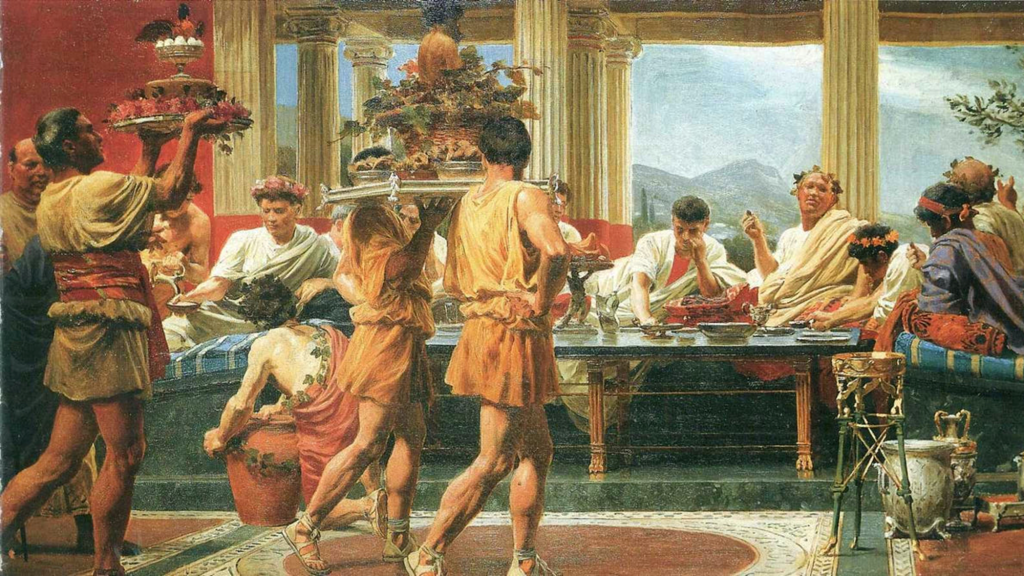
A typical dinner for these folks was luxurious and intellectual. The loftiest ideas – for those who could understand. The finest food – for those who were invited. Meticulous decorations. You folks might say it was “Instagram-worthy.” As in Roman symposia, the most important people were given the best spots. Servants kept every wine glass topped up and every plate loaded… whatever the guests wished for. I was well-familiar with these kinds of lavish gatherings composed of such cosmopolitan characters. This was the clientele I would often write for. They paid well.
A city like Corinth had plenty of hungry unfortunate folk… Their natural place was on the street… but having no understanding of how dinner invitations work, they sometimes would find their way into those gatherings… These sad folks were tolerated… permitted to watch… provided that they would not disrupt our proceedings with their sounds… or their smells… Someone told me about a beggar who wandered in months ago… he literally died of hunger. No ‘body’ in the gathering had noticed… Out of sight… and out of mind… in an adjacent room, he’d quietly fallen asleep… permanently. Thankfully, some of the servants of the house were believers and they tended to his body… though they gave his burial more time and expense than most would have thought appropriate…
The attendees at these gatherings were typical in their Corinthian-style immodesty and what we might call ‘ethical flexibility’. Controversially for many, the heads… and bodies… of some of the women… could frequently be uncovered… Many attending these gatherings could also be spotted taking part in proceedings at the temple of Asklepios… some even participating freely in the infamous after-parties, where more than food was on offer… “The body is for meats!” was a rationale which applied just as much to sex as it did to food. Such people latched on to some of Paul’s language about being ‘free’ in Christ… conveniently forgetting the parts about self-control and considering others… Such logic had one member proudly justifying a sexual relationship with their father’s newest wife… In Greek ways of thinking, matter didn’t truly matter. And apparently neither did the body. It was merely a temporary tool for attaining pleasure and status. A costume.
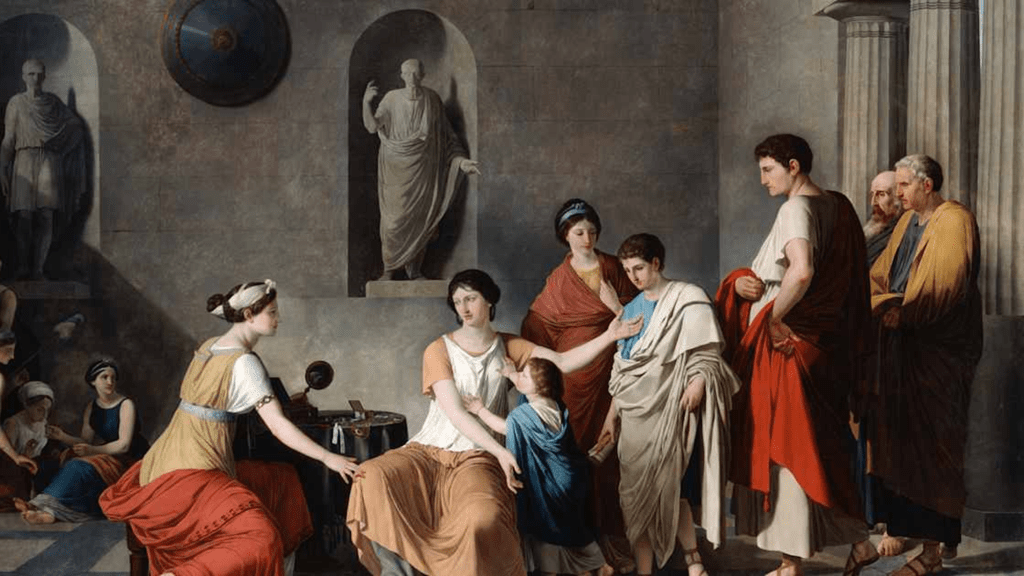
By contrast, the dinner gatherings of Chloe and her household were strikingly different. Chloe was a very successful businesswoman, and one of the early Greek women to join the way of Christ. She stood in a rich and fruitful line of leading Christian women – stretching from that early Resurrection morning by the tomb to now. Mary, Phoebe, Lydia, Priscilla, Junia and Chloe. And more… Women who changed the world. Chloe owned a number of olive groves and her oil was prized and distributed all over the region. Since following Christ, although Chloe’s business continued to be profitable, she was less motivated to maximise business success, and more interested in people, ministry and the Good News.
The social dynamic of her gatherings was something I’d never seen. And I’m not talking about the generous amount of Chloe’s premium olive oil at her table. I’m talking about the awkward, uncomfortable disregard for rank and status. Quite simply, there were no special guests eating special food in special places. Indeed, the only ‘special’ person at this meal was the risen Lord Jesus, who they insisted was present with them – especially as they broke a ceremonial loaf of bread and shared a cup of wine. More on that later… This dinner, with Jesus at its centre, seemed to be open to the whole world. It was for every… body. Glamourous bodies and disabled bodies. Rich and poor bodies. Jew and Gentile bodies. Male and female bodies. The altered or differentiated bodies of eunuchs. Every ‘body’ shared the same table…
In his letter, Paul had mentioned a number of people who were still alive who claimed to have seen Christ alive after his crucifixion. I was shocked to learn that two of them were part of Chloe’s household. Could such a thing really be true? If so, what did that even mean? How did it fit with the philosophy I was so arrogantly proud of? What was the significance of a single person being raised from the dead? What philosophical relevance did it have for the rest of us? And yet, this strange Resurrection philosophy was clearly animating these people… They were convinced, philosophically and practically, that the purpose of the ‘body’ was not directed at sex or food… but at serving the Lord and one another. It was clear that their future hope in the resurrection of the body was the motivation behind their concern for every ‘body’ here and now.
So different from the Apollos group! Instead of debates dominated by speakers, these gatherings were ordered. They prayed in turn. Read scripture. Chanted Psalms. There were moments for everyone to respond together as one Body saying responsive phrases like “Jesus is Lord” or a simple “Amen.” You didn’t have to be a scholar to participate. Every ‘body’ had something to give… and something to receive.
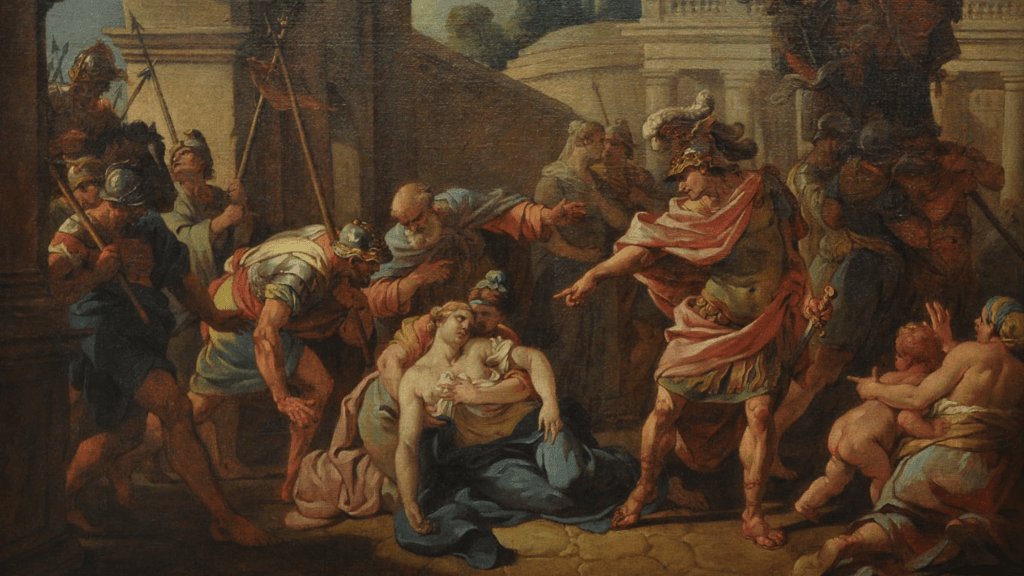
I’ll never forget meeting Chloe’s adopted son, who she had named Anastasios, which means ‘Rising up’. His body was a little small for his age. His thin legs were unconventionally angled. Others helped him with his meal. He thanked them and took his turn leading the gathering in prayer… speaking slowly but with definitive clarity. His tone and eyes radiated joy. Chloe had taken him in off the street – literally. He did not know his parents. You see, a practice that was common in the Roman world, which I have now come to detest, was leaving disabled or deformed infants ‘exposed’… to die… in a ditch. To have a body that was not ‘healthy’ was unfashionable for cosmopolitan Roman families. The resurrection of Christ, and the resurrection to come, had transformed Chloe’s mind. She valued lives and bodies that were unwanted…
Chloe would always introduce Anastasios as one of the teachers in the household. “He teaches us how to serve and be served. To give and receive. How to hope, believe, pray, and persist through suffering.” She meant every word. And she was absolutely right. God truly uses what we think of as ‘weak’ to humble those we think of as ‘strong’…
I began to see the true foolishness of the intellectual debates of the Apollos crowd, and the true wisdom of the radically counter-cultural Resurrection ethics of Chloe and her household. Their communal life embodied the Gospel. It was a letter to me… a letter I was learning to read… and a letter that was ‘reading’ me…
I had always thought that the values, ideas, and lifestyle I had inherited from Greek culture was so strong, wise, and glamorous. But I was now clearly seeing that they contributed to a world-system that divided people into those that mattered and those who didn’t… the strong and the weak… the valued and the worthless… the honourable and the dishonourable… the high and the low… the rich and the poor… the successful and the forgotten…
The comfort and living of a select few was built on the suffering and death of many… The more time I spent with Chloe and her household, the more I cared about every ‘body’ my world-system was harming. I felt dead… trapped within the system. I wanted out. I needed to get free. I needed what Chloe and her household had. I needed everything their Christ offered and gave… I needed to be raised to new life.
One evening after the gathering, I spilled all this out in conversation with Chloe and a few others. She told me that in confessing this with my mouth, I had already begun to receive the new life I knew I needed. As they prayed for me, I felt waves of freedom, and purpose, and life flow into my mind, heart, and body. A new Spirit.
I was due to return to Paul with a report on my time, which now included news of my own conversion. Paul beamed with joy, and when I asked if he could answer my many questions he eagerly agreed. It turned out that writing that second letter with him provided us with a timely opportunity to continue our conversations to help me grow in my understanding.
The Resurrection really is the truth that holds all other truths. When Christ rose on the third day, the ultimate future of humanity and even the cosmos, walked out of the Tomb. The future had rushed into the present. His risen and indestructible body was the template for the transformation, redemption, healing, and glorification of the entire human person: bodies, brains, neurons, hearts, motives, wills, relationships – our entire selves will be made new.
All kinds of bodies will be glorious and free. Male and female bodies. Modified and mistreated bodies. Abled and differently abled. All bodies need freeing and healing. Resurrection does not mean the perfect male and female bodies look like Achilles and Aphrodite, or to use some of your examples Brad and Angelina. No. Resurrection will make you more you, not more like some generalised ideal from Greek or any other cultural imagination.
Just as Christ’s risen body still bore the wounds and scars of the Cross, so too our bodies will be redeemed to reflect – and heal – all the experiences, deformities, modifications, injuries and anything that hinders us. Our bodies will be liberated into glorious freedom.
The Resurrection also extends to every corner of the cosmos. New gardens, new cities, new oceans, new ecosystems, new solar systems. New stargazing. New moon-rises. New biology. New chemistry. New physics. New Creation. New Heaven. New Earth.
This ultimate future is to be anticipated now. Resurrection means we have work to do. Justice will reign in this this New Heaven and New Earth. Justice for every Body. We anticipate Resurrection when we work to feed, clothe, house and care for every Body.
And we practice our care for every Body when we practice communion.Communion is for every Body. It’s not a sumptuous meal with my best mates who are just like me. It’s not about ignoring others to have a private moment with me and God. It’s about practicing Common Union as one Body.
And so, my sisters and brothers of Birkenhead Community Church, when you gather around the table of the Lord, do not feast like the world. Remember the Lord’s death. Proclaim his Resurrection until he comes again. Celebrate as one Body. Honour every Body.
Christ is Risen. He is Risen Indeed. Alleluia. In the common hope of Resurrection from the Dead, Tertius.













 Recovering the Kingdom